
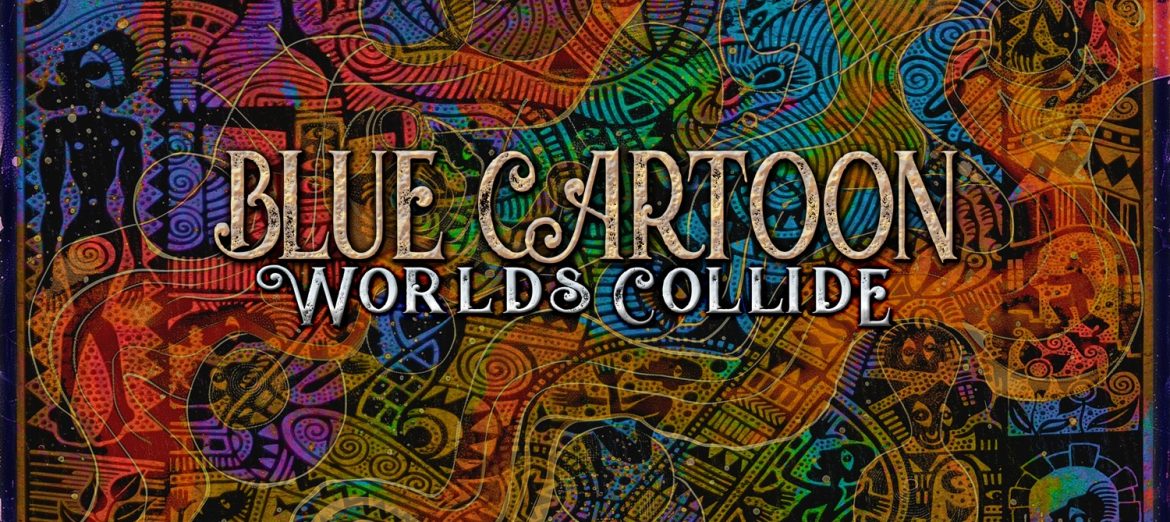
After thirteen years between albums, Blue Cartoon returns with two releases that connect its power-pop history to psych folk, electronic experiments, and a broader musical palette.
Blue Cartoon returns after a thirteen-year gap between albums with enough music to make the silence seem deceptive. Stars Align and Worlds Collide document a project that kept developing while the band’s public presence faded. One of the releases is a double album, giving this return the scale of three records. The two albums show a lot of variety and versatility while staying true to the band’s identity. The melodies and harmonies still connect to power pop, even when the arrangements move toward psych folk, electronic experiments, and sounds drawn from further afield.
The circumstances behind these recordings help explain that range. Lee Elliott initially approached the material as a solo project before inviting David Loren to join a duo called The Spandrels. Working in Lee’s home studio, the pair built up recordings with contributions from musician friends. Without a drummer, they relied on machines and plugins, a practical solution that complicated their original plans for a more organic folk sound. Work paused when Blue Cartoon regrouped for Are You Getting On?, released in 2013, then resumed after that incarnation gradually dissolved.
Mike Reynolds eventually added drums and percussion, bringing a more physical rock feel to the recordings. Lee’s move to California in 2016 introduced another interruption, but the exchange of files continued across state lines. Parts were replaced, overdubs accumulated, and more songs arrived. As the project developed, its relationship to Blue Cartoon became increasingly clear. With the other members’ blessing, Lee and David revived the name. This return centers on their continuing partnership, with Mike’s contributions helping connect the studio project to the band’s earlier life.
Lee describes Stars Align as the gateway between that history and the more eclectic Worlds Collide. The distinction makes sense, although the first record already contains plenty of departures. Familiar pop instincts provide a clear point of entry, and the arrangements gradually reveal how far those instincts can travel. The relationship between the two releases gives this substantial collection a useful shape.
The title track begins with a mesmerizing texture and dives into a beautiful psychedelic soundscape with a mid-tempo feel. Wings meets Pink Floyd, with hints of Minus the Bear during the Planet of Ice era, while the vocal harmonies are very Steely Dan. Those comparisons describe different aspects of the song: its melodic warmth, spacious atmosphere, and carefully arranged voices. Together, they suggest how comfortably Blue Cartoon moves between classic pop writing and a more expansive approach to arrangement.
“I’m Still Waiting” is another highlight, with its 12-string guitar arpeggios and hypnotic drum feel. The combination brings a distinctly 1960s character, supported by stunning melodies and a dreamy tone. Here, the guitar and rhythm establish much of the song’s personality. The repeating figures give the track continuity, while the melodic writing keeps the atmosphere engaging. It also draws a clear connection to Lee’s affection for the territory shared by The Byrds and Teenage Fanclub.
“Little Neutrino” closes Stars Align with experimental synth tones and a particularly playful sense of possibility. Vocoder vocal melodies and old-school synthesizer sounds combine with acoustic tones for a retro-futuristic approach. It is like Daft Punk jamming with The Beatles, a comparison that captures both the electronic treatment and the enduring interest in melody. The closer gives Blue Cartoon room to open up and explore different influences. Its placement also makes the move toward Worlds Collide feel natural, with the first album already pointing toward less predictable arrangements.
Worlds Collide brings folk-inspired elements and storytelling further forward, blending them with rock, pop, and a wider range of textures. The emphasis shifts, but the melodic sensibility remains recognizable. Across the two releases, the writing provides continuity as the instrumentation changes. That connection matters when the music moves between straightforward songs and passages that invite more attention to sound, atmosphere, and the interaction of contrasting parts.
“Everdream/Sleeper Theme” offers a particularly clear example of the range involved. Eastern sounds sit alongside acoustic tones, synth experiments, and psychedelic dream pop. The combination gives the track several musical perspectives within the same space, reflecting the more exploratory direction Lee identifies with Worlds Collide. Acoustic and electronic sounds both contribute to its character. The appeal lies in how those different textures share the arrangement, extending the album’s folk interests into something more difficult to place within a single genre.
“Down In The Trenches” takes a more direct route. It is quintessential pop rock in the manner of Tom Petty, with a bit of folk influence, but tight and energetic throughout. Its refreshingly back-to-basics approach is a reminder that a great song can do a great deal with melody and momentum. Within an album that accommodates so many different sounds, that straightforwardness becomes part of the variety. The track gives the more experimental material a useful counterpart and keeps the songwriting firmly in view.
“Sorrytown” returns to the combination of experimental textures and folk writing, adding elements of 1990s indie and alternative music. Sparklehorse and Elliott Smith come to mind, particularly as reference points for the meeting of intimate songwriting and unusual surroundings. The song expands the record’s character through that relationship between familiar melodic shapes and less conventional textures. It also helps explain why psych folk is such a useful description for this phase of Blue Cartoon, while leaving room for the other influences moving through the album.
“Dark Eyes” brings another change in emphasis. Playful xylophone-style melodies meet crunchy guitar tones and some of the fattest drum sounds across the two records. It is a 1960s-style pop-rock jam dressed like a 1990s alt-country track, with something of R.E.M. jamming with The Byrds. That mixture gives the song a lively, tactile character. The contrast between the bright melodic figures and the heavier rhythm sounds is especially appealing, adding another distinct approach to an already varied collection.
The recordings’ mixture of acoustic and electronic sounds also has a history beyond stylistic preference. Drum machines entered the project because The Spandrels lacked a drummer; live percussion later helped pull it toward rock. The finished music carries both interests, particularly in the contrast between the synth experiments and the more direct guitar songs. That background makes the breadth of these albums easier to understand. Their variety grew through the musicians’ changing circumstances and continued exchanges, with each contribution helping Lee’s original solo idea develop into a substantial body of shared work.
Taken together, the albums connect California sunshine psych with British rock and melodic writing, drawing on influences from the 1960s through the 1990s. Their scale asks for time, especially with a double album among the two releases, and the change in emphasis between them rewards separate attention. Stars Align offers the clearest connection to the band’s established pop sensibilities. Worlds Collide broadens the setting, giving its folk interests and experimental textures more space to develop.
The years behind these recordings are audible in their range and collaborative character. Lee and David have allowed an initially personal project to grow through shared work, distance, and changing circumstances. There is passion and talent here, supported by a longstanding love of making music together. With Stars Align and Worlds Collide, Blue Cartoon returns with its melodic identity intact and plenty of ideas still moving through it.